
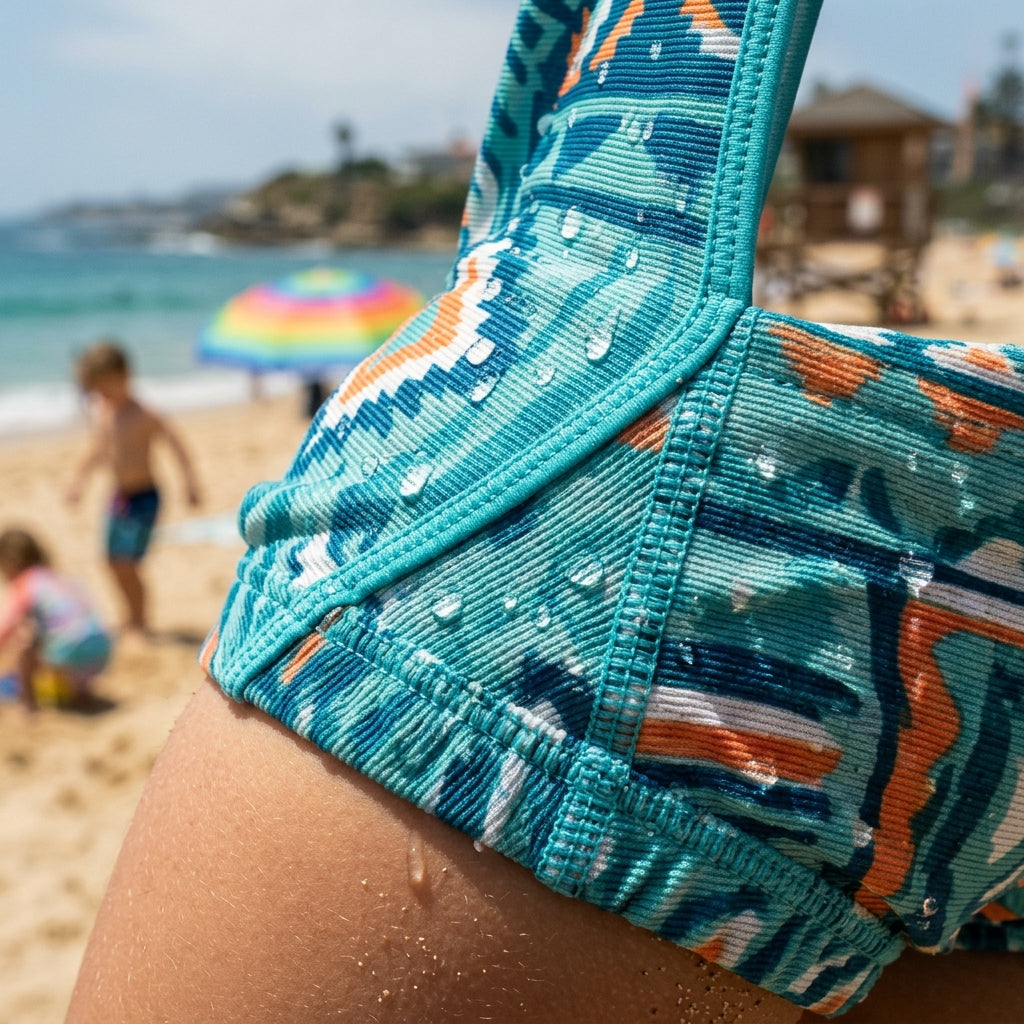
A boys one-piece swimsuit is a single garment — often a one-piece rash guard — that covers the torso in one piece instead of a separate top and bottom. This guide explains when that style makes sense for swim lessons, beach days and active water play, how it differs from a two-piece rash guard set, and how to check fit and any UPF 50+ rating on the product page.
What a boys one-piece swimsuit is
In our one-piece swimwear and boys swimwear collections, a boys one-piece is usually a rash guard swimsuit: long or short sleeves, a graphic or color-block body, and a short-leg or built-in-shorts silhouette sewn as one garment. Nothing can ride up or separate at the waist the way a two-piece set can during play.
Examples include the boys UPF 50+ long sleeve shark one-piece rash guard swimsuit, which the product page describes as a shark-mouth design with long sleeves and a short-leg silhouette, and the boys short sleeve one-piece rash guard swimsuit – shark graphic, whose page describes a short-sleeve silhouette with built-in shorts. Browse the photos and details on each page, because features are not the same on every style.

When a one-piece makes sense
A one-piece is often the easier choice when you want the top to stay put. That matters in swim lessons, at a busy pool, or on a beach day with a lot of running in and out of the water. There is only one garment to put on, and there is no separate shirt to pull down or shorts to hitch up mid-lesson.

A two-piece rash guard set can still be a good match when you want to mix a long-sleeve shirt with shorts, or when taking the top off after swimming is useful. For that option, see Boys Long Sleeve Rash Guard: How to Choose a Swim Set.
Long sleeves, short sleeves and coverage
Long sleeves cover the arms as well as the shoulders and back, which is useful on outdoor pool and beach days. The American Academy of Pediatrics recommends clothing that is preferably long-sleeved and long-legged, along with hats, as part of a wider plan to reduce ultraviolet exposure. A short-sleeve one-piece still keeps the torso in one piece but leaves more of the arms uncovered, so those areas still need the sun-safety steps you already use, including sunscreen on bare skin. For what a UPF 50+ rating does and does not cover, see UPF 50+ Kids Swimsuits: How to Choose Sun-Protective Swimwear and our existing Kids Rash Guards: A UPF 50+ Buying Guide.

UPF 50+ — only when the product page says so
UPF 50+ applies only to styles that list that rating in the title or description. The shark long-sleeve one-piece above is described as UPF 50+, and so is the boys UPF 50+ long sleeve plaid one-piece swimsuit (beige, brown and black plaid with contrasting white sleeves). The boys zip-up one-piece rash guard – black color block also lists UPF 50+ for that labeled style.

Other one-pieces are not described that way. The boys long sleeve one-piece rash guard swimsuit – green & black is a color-block one-piece whose page describes long-sleeve coverage and quick-dry fabric, but it does not list a UPF 50+ rating. The short-sleeve shark one-piece linked above also does not list UPF 50+. If a page does not say UPF 50+, do not assume that rating. Test reports are available for styles that carry the rating.
How a boys one-piece should fit
The swimsuit should sit close enough to stay in place in the water without pulling across the chest, shoulders or legs. Compare your child's measurements with our Kids Swimwear Size Guide and the parent article Kids Swimsuit Size Chart: How to Choose the Right Size, then confirm the sizes listed on the product you are buying.
The shark long-sleeve, plaid long-sleeve, green-and-black long-sleeve, and short-sleeve shark one-pieces currently list sizes 2T through 12T. The zip-up black color-block style currently lists sizes 4T through 16T, which is a different range — always check that product page before you order.
A one-piece or a rash guard set?
Choose a one-piece when you want one garment that stays together through lessons and play. Choose a rash guard set when you prefer a separate shirt and shorts, such as the boys long sleeve rash guard swim set, whose product page lists UPF 50+ and sizes 2T through 12T. The two styles solve slightly different days; this article is the one-piece guide, and the set is covered in the long-sleeve rash guard article linked above.
Frequently asked questions
Why would a boy wear a one-piece swimsuit?
A one-piece keeps the top and bottom together, which can be simpler for swim lessons, busy pool play and beach days when a separate shirt might ride up. It is a practical coverage choice, not only a toddler style.
Are boys one-pieces only for toddlers?
No. Several MOMASONG boys one-piece styles currently list sizes from 2T through 12T, and the zip-up black color-block one-piece currently lists 4T through 16T. Check the size list on the product page and use the size guide.
What is the difference between a boys one-piece and a rash guard set?
A one-piece is a single garment. A rash guard set is a two-piece outfit — usually a swim shirt plus swim shorts — so the top can come off after swimming. For how to choose a set, see Boys Long Sleeve Rash Guard: How to Choose a Swim Set.
Is every boys one-piece swimsuit UPF 50+?
No. Some styles, including the long-sleeve shark and plaid one-pieces and the zip-up black color-block rash guard, list UPF 50+ on their product pages. Others, including the green-and-black long-sleeve one-piece and the short-sleeve shark one-piece, do not. Read the title and description of the style you are buying.
How should a boys one-piece swimsuit fit?
It should stay in place in the water without pulling at the shoulders, chest or legs. Use the size chart and the measurements on the product page rather than guessing from age alone.
Can a boy wear a one-piece rash guard to swim lessons?
Yes. A one-piece is often a practical lesson choice because there is only one garment to put on and it stays together in the water. Confirm any pool or class clothing rules, and check the fit so he can move comfortably.