

Chlorine Resistant Kids Swimwear: A Retailer’s Smarter Buying Checklist
The toughest swimwear question rarely arrives as a technical one. It arrives when a parent brings back a suit after a month of lessons and asks why it no longer feels like the piece they bought. For a retailer, the answer is not simply “choose better fabric.” It is to build a clear story around use, care, fit, and the garment itself.
That is why chlorine resistant kids swimwear deserves a place in the buying conversation—especially for stores serving families with regular pool time. A useful range helps shoppers choose for the way their child actually swims, then gives them realistic care guidance once the suit leaves the shop.
Start with the child’s real swimming routine
Not every swim purchase has the same job. A suit for a week at the beach, a school pool program, and twice-weekly lessons may all sit in the same category online, yet the customer’s expectations are different.
Ask retailers and sales teams to begin with a simple use-case filter:
- Regular pool lessons: shoppers often value a secure fit, freedom to move, and a routine that is easy to repeat after every session.
- Long outdoor days: a long-sleeve rash-guard option can be a practical part of a sun-conscious edit; MOMASONG lists UPF 50+ styles in its rash guard collection.
- Holiday and occasional use: parents may lead with print, comfort, and an easy-on style, while still needing straightforward after-swim care.
This is a better retail conversation than treating “chlorine resistant” as a catch-all promise. It lets the buyer assemble a balanced rail: lesson-ready options, sun-coverage choices, and styles for relaxed water play.
What chlorine resistant kids swimwear should mean in a product conversation
The useful claim is not that a swimsuit is indestructible. Pool chemicals, sun, sand, friction, and repeated stretching all ask something of a garment. The practical question is whether the style and its care guidance are suited to repeated water use.
MOMASONG’s Size Guide & Fabric Care describes its swimwear fabric as chlorine resistant, quick dry, and four-way stretch. It also identifies an 82% recycled polyester and 18% spandex composition on that page. Those are helpful starting points for a product listing or staff training note, but a retailer should keep the language specific to the actual approved style and season.
Rather than promise an outcome a parent cannot measure in advance, explain the benefit in plain language: this is swimwear designed for active water play, and a simple rinse-and-dry routine helps it stay in better condition.
Turn fabric knowledge into a shelf-ready buying checklist
For a wholesale assortment, the best fabric discussion is one a store team can use in under a minute. Before confirming a range, work through these five checks.
1. Match coverage to the activity
For outdoor swim sessions, include rash-guard sets alongside standard swimsuits so parents can compare coverage without abandoning movement. The MOMASONG shop groups girls’ swimwear, boys’ swimwear, rash guards, and accessories, which makes that comparison easier to merchandise.
2. Check the fit message, not only the size label
Swimwear needs to stay in place in water without making movement feel restricted. MOMASONG’s guide recommends a snug, secure fit with room to move and suggests checking height and body measurements. Give staff the same reference point and link customers to the size guide instead of relying on age alone.
3. Put care instructions where the decision happens
Care is part of the product, not a footnote. The live guide advises rinsing in cold water after use, hand washing with mild detergent, avoiding bleach and softener, drying in the shade, and avoiding tumble drying, ironing, and rough surfaces. A concise care card on the product page or at checkout turns that information into a habit.
4. Ask how fabric is handled before production
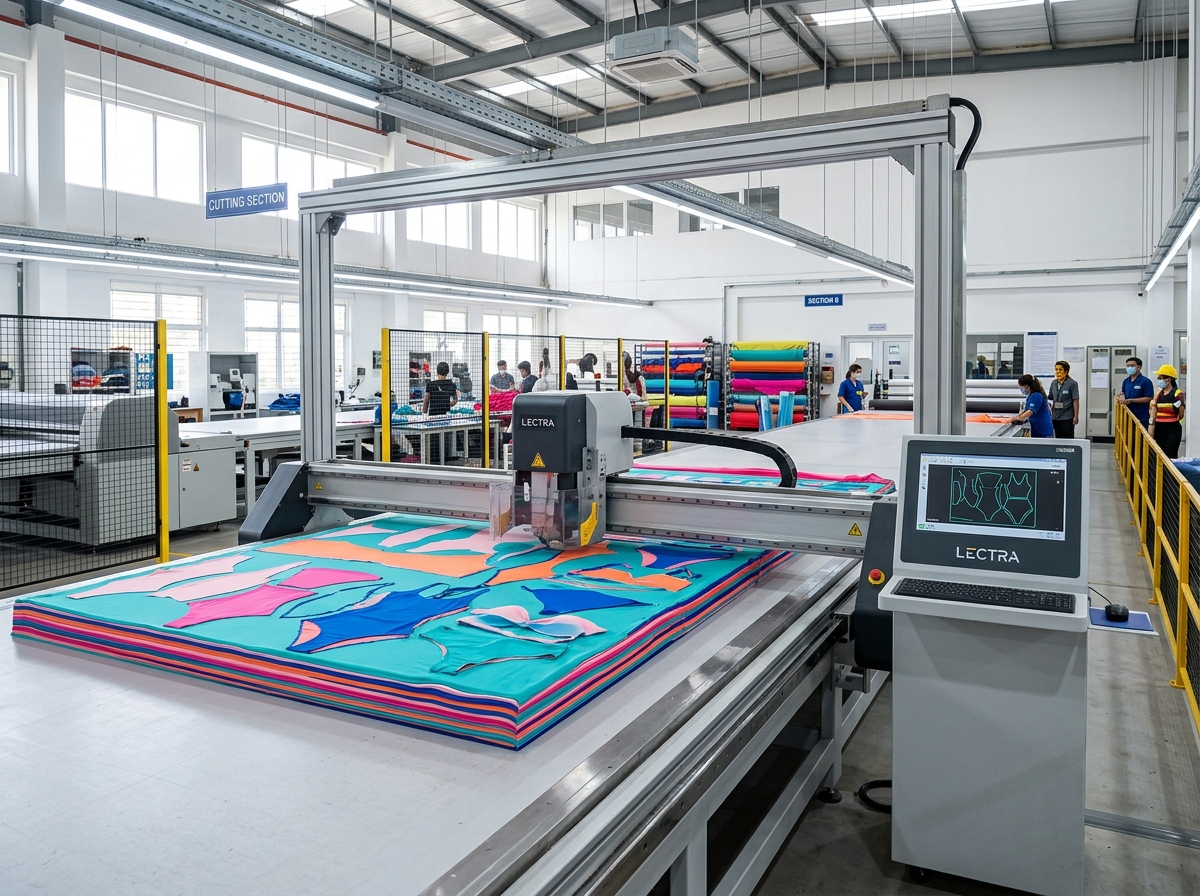
Private-label buyers should bring fabric questions into the development stage, not save them for a last-minute product description. MOMASONG’s OEM/ODM process shows fabric inspection and cutting as part of its facility workflow, alongside sample development and quality checks. Use that conversation to align intended activity, coverage, fabric choices, labels, and care copy.
5. Keep durability language honest
Avoid borrowing broad performance language from a category page and applying it to every SKU. Confirm the approved specification for each design before publishing claims. Clear, accurate product information earns more trust than an overextended durability promise.
A small care moment can reduce buyer hesitation
A parent who understands what to do after a lesson is more likely to feel confident about a specialist swimwear purchase. That is a merchandising opportunity: position a hanging plan, gentle handling, and a cold-water rinse as part of the swim-day routine—not as a warning label.
For retailers, this approach also makes the range easier to sell. A staff member can connect the customer to the right coverage, fit guidance, and care steps in one conversation. The value is not a dramatic claim; it is a calmer, more useful purchase decision.
Frequently asked questions
Is chlorine resistant kids swimwear only for competitive swimmers?
No. It can be relevant to any family with repeat pool use. The better starting point is how often and where the child swims, then the fit, coverage, and care support that suit that routine.
Should a retailer promise that a chlorine-resistant suit will never fade or stretch?
No. Avoid absolute claims. Explain the intended use and share the care guidance for the specific product; exposure, handling, and frequency of use vary.
What should a private-label brand confirm before launch?
Confirm the approved fabric and construction details, intended activity, size and care information, and the exact claims permitted for each SKU. MOMASONG’s quality page describes its fabric inspection and production checkpoints as useful context for that discussion.
Build chlorine resistant kids swimwear into a clearer range
The strongest chlorine resistant kids swimwear offer is not built on one phrase. It pairs a considered assortment with fit help and care information that parents can actually follow. For help shaping a retail or private-label range around that standard, contact MOMASONG to discuss the collection and development options that fit your brief.